
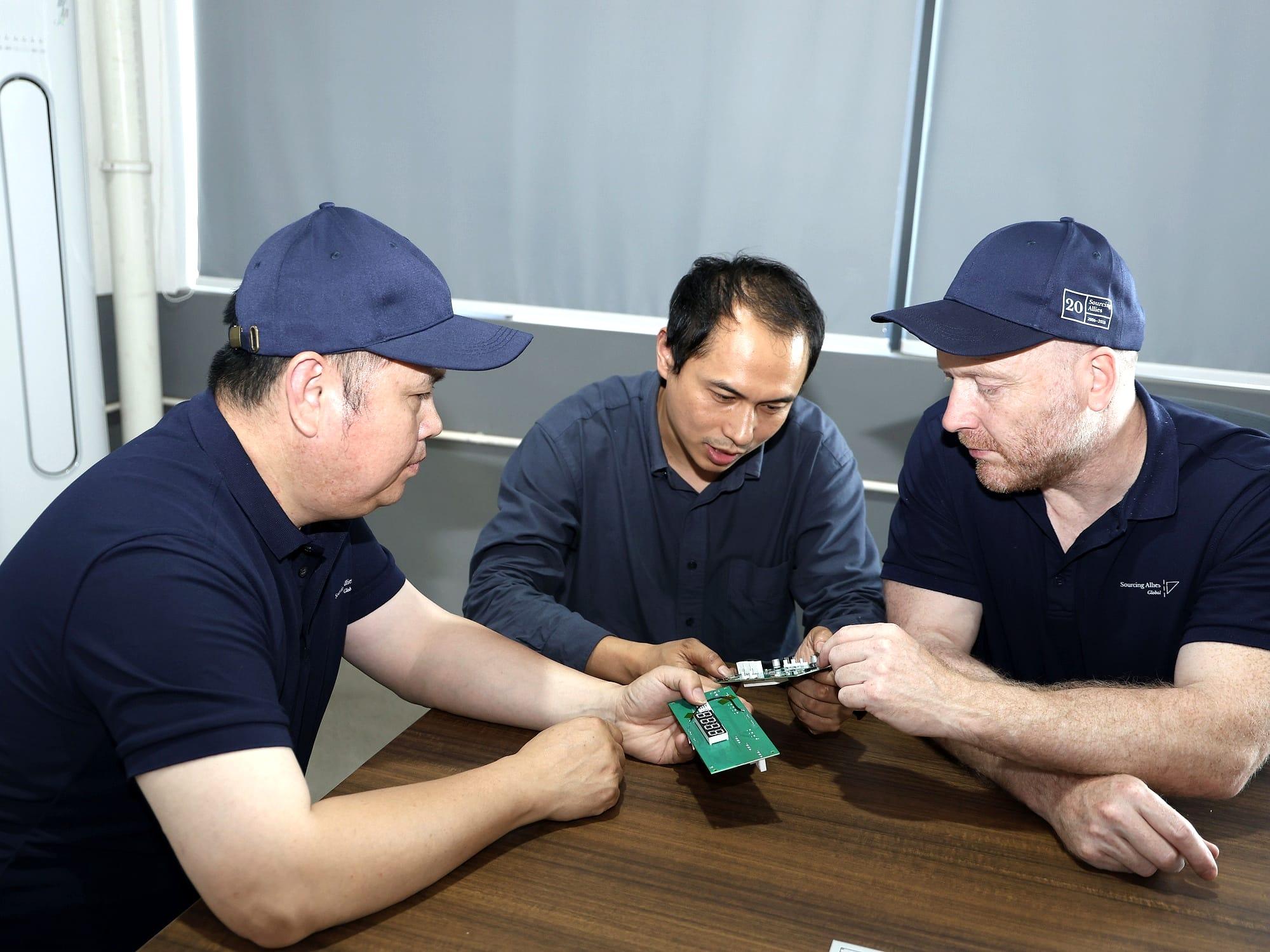
Pre-production samples that find the problem before your tooling money does
For hardware founders with a working prototype and no manufacturing team. Your prototype works, but that doesn't mean a factory can build it. We take your pre-production samples through three pass/fail gates, EVT, DVT and PVT, at factories in China and Vietnam. You find what breaks while it's still cheap to fix, and before you promise backers or investors a date.
Finished on screen isn't finished for a factory
A CAD file can look done and still be missing what a factory needs: tolerances, draft angles, material grades, a spec for the finish. Most first-time founders find this gap after the moulds are cut.
- 01
Tooling you pay for twice
If the drawings weren't ready for production, the mould gets reworked and you pay for it again.
- 02
A date your backers already have
Each round of rework costs weeks, and your shipping date doesn't move to make room for them.
- 03
Suppliers you can't check
A website won't tell you if you're dealing with a real factory or a trading company, or if the sample came off their own line.
EVT, DVT, PVT: three cheap exits, not one expensive surprise
Every stage ends with a go/no-go decision. If a sample fails, you stop, fix it and run it again before any more money is committed.
EVT: engineering validation test
Does it work? We build samples with near-final components and test every function. The gate: every function works, and every engineering issue has a fix before design money is committed.
DVT: design validation test
Does it meet the design intent? We check form, fit, finish, durability and the regulatory requirements for your target market. The gate: the design is frozen and ready for final tooling.
PVT: production validation test
Can the factory repeat it? We run a small batch on the selected factory's line under final production conditions. The gate: the units are consistent, match the approved sample and are ready for the first production batch.
Built by specialists in China. Shipped to you.
1M+ products shippedIn Asia since 2006Offices in Stockholm, Ningbo and Seattle
From CAD file to golden sample in six checked steps
1. Engineering review: our engineering partners check tolerances, draft angles, materials and finish specs. Pass: a factory can quote and tool from your drawings.
2. Supplier matching: we confirm each supplier is the actual manufacturer, then audit staff size, machines, process control, worker safety and management structure. Pass: you know who is making your part.
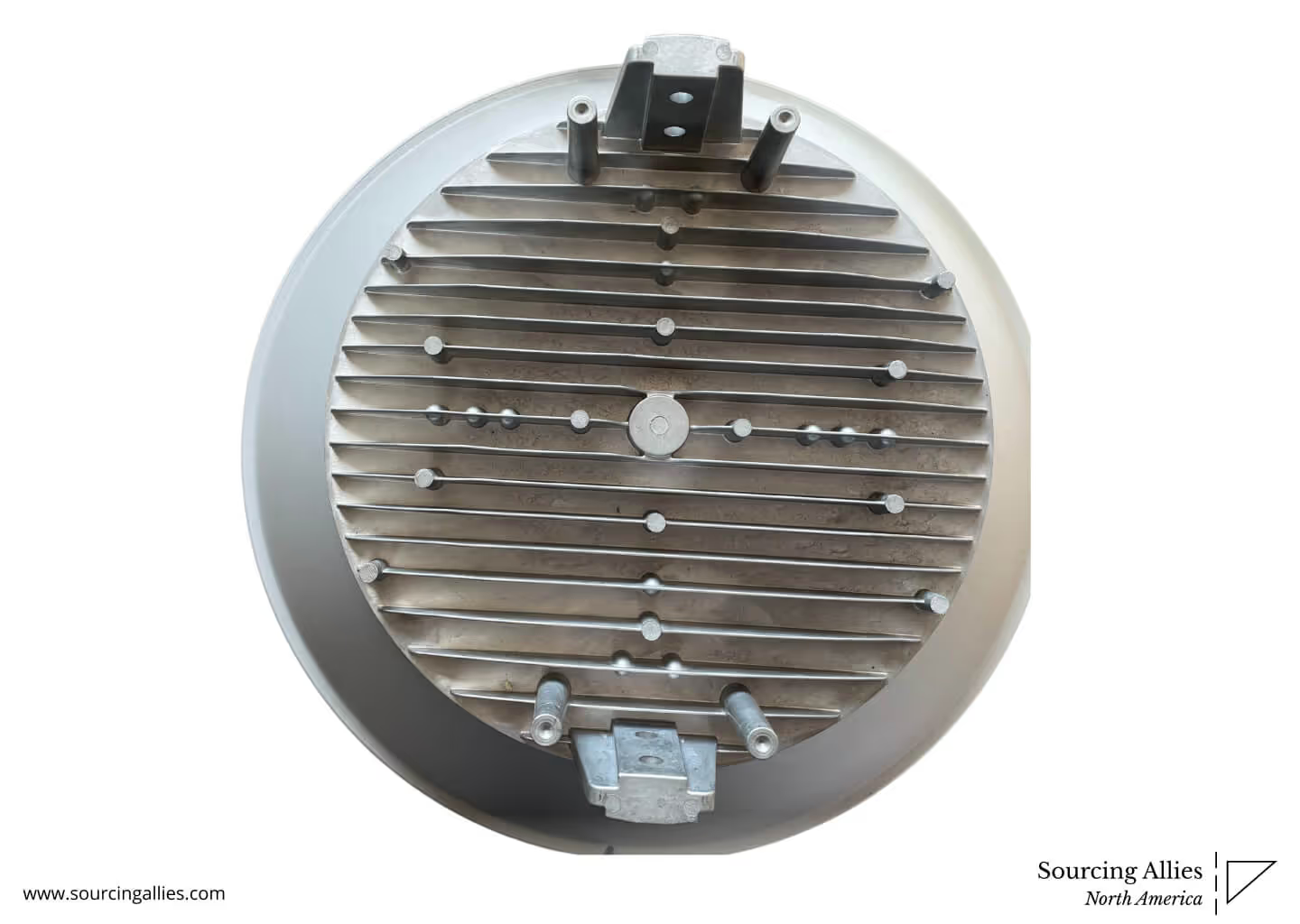
3. Tooling and sampling: moulds, fixtures and tools for plastic injection moulding, die casting, forging, metal stamping or aluminium extrusion. Pass: the samples match the spec.
4. Component inspection: we check each part for dimensions, function and finish. Pass: every part is approved before assembly.
5. Validation and assembly: we assemble and test complete units. Pass: you sign off a golden sample that every production unit must match.
6. Go to production: function, finish, unit cost and lead time meet your targets. Pass: you have a costed plan you can show investors.
One team on the factory floor, accountable from drawings to delivery
You don't need to fly to China or chase twelve suppliers across time zones. Our bilingual delivery managers in Ningbo visit the factories in person and turn your spec into terms a factory owner will act on.
Prototype to 5,000 units shipped: 200+ components across 18 suppliers, assembly line set up, QC and logistics managed.
148 components, 72 suppliers, 6 countries: a full assembly line built from scratch and delivered on time, with one point of contact.
Changing a drawing is cheap. Changing a tool that has already been cut is not. That's why we review drawings before tooling and check every EVT, DVT and PVT sample at the factory.
Backer units out by the date you promised. We've done it for crowdfunded projects before, and our Fast-Track programme is built for that deadline.
What founders ask before they pay for tooling
Pre-production samples are units built with production-intent parts, processes and tooling before full production starts. They show whether the product works, meets its design intent and can be built the same way every time. You approve them as the reference that every production unit must match. At Sourcing Allies, samples pass through three gates, EVT, DVT and PVT, before any volume order.
EVT, DVT and PVT are three validation stages, and each one answers a different question. The engineering validation test (EVT) checks that the product works with near-final components. The design validation test (DVT) checks form, fit, finish, durability and market requirements, and ends with a frozen design. The production validation test (PVT) runs a small batch on the real production line to show the factory can repeat the result.
Skipping EVT or DVT usually moves the risk to PVT, where a fix means reworking tooling you've already paid for. A better approach is to plan the gates backward from your delivery date and allow for factory shutdowns like Chinese New Year and Golden Week, which can take weeks out of a schedule. Our Fast-Track programme for crowdfunded and investor-backed launches is built around that kind of plan.
How long pre-production sample validation takes depends on how many custom parts need tooling and how many sample rounds each gate needs. After the engineering review we give you a plan with lead times for each gate, so you can check it against your launch date.
Sourcing Allies signs an NDA on every project and contracts through legal entities in Sweden, the US and China, so you have recourse in more than one jurisdiction. Before any supplier gets your files, we confirm it is the actual manufacturer and not a trading company passing your drawings on.
You need a sourcing partner when your product has many custom parts, several suppliers and assembly to coordinate, which is typical for connected and AI devices. If your product is a single simple part, a partner adds cost without adding much value, and we'll tell you so on the first call.
Bring your prototype. Leave with a plan.
In the meeting we look at where your design stands and which gate comes first. We also tell you what we need from you to give you a unit cost and lead time.


A drawing, a sketch or a paragraph is enough to start.