China is the world's largest source of white label goods across almost every product category. Getting the branding right is straightforward. Getting the quality right — consistently, at scale — is where most buyers need help.
White label sourcing from China gives product brands and retailers a faster, lower-cost route to market than custom manufacturing. You choose an existing product, apply your branding and packaging, and sell it under your own name — without investing in tooling, moulds, or product development.
The model works well when it is managed well. The risks — inconsistent quality between sample and production batch, labelling errors, supplier communication breakdown — are real and common. This guide covers where to find white label suppliers in China, what to watch out for, and how to make sure what arrives matches what you ordered.
In this piece, we will discuss what white label goods are all about, with a special focus on sourcing them from China. Read on to find out:
A white label product is produced by one company (the manufacturer) but sold by another (the retailer) with its own logo and branding. Take into consideration the American retailer Costco’s signature Kirkland brand of batteries Would it surprise you to know that these are made by Duracell?
These products are often also called private label goods, though there is a significant distinction between the two. White label goods are generic products that are sold to multiple retailers, which in turn resell them under their own brands. For example, the generic anti-inflammatory drug ibuprofen is sold under numerous brand names, most commonly Advil, Motrin, and Nurofen. Private label goods, on the other hand, are sold by the manufacturer exclusively to a single retailer. Walmart’s Great Value brand of white bread, which is made by Sara Lee, is an example of a private label product. Another difference between the two is that while private label goods can be customized to some extent, white label goods cannot.
If you’re curious about the term ‘white label’, visualize a blank label on a manufactured product that can be filled with the retailer’s branding. That’s basically what it means. Interestingly, by some accounts, the term has roots in the music industry. In the age of vinyl records, recording companies were in the practice of creating promotional copies of new music and handing them out to radio stations and night clubs to test the response to the music before the actual mass-production began. These promotional copies came in sleeves with white labels on them.
While white label goods can be found in just about any industry, they are massively popular in the food and beverages, pharmaceuticals, electronics, cosmetics, personal care, and pet supply sectors. Retail giants like Walmart, Tesco, Whole Foods, and Target have found success selling branded goods made by third-party manufacturers. And while the term might be white label goods, the services sector also uses white labelling. An example of this being the department store chain Macy’s offers a store card that is provided by American Express.
For retailers selling white label goods, a key advantage is that they don’t need any manufacturing investment or experience. The manufacturer takes care of the entire production process, including product characteristics and components. They also produce the goods at a much cheaper rate than the retailer ever could. Other benefits include:
However, there are some drawbacks as well:
With its manufacturing expertise, skilled workforce, advanced trade infrastructure and competitive prices, you can source nearly any kind of product from China. This includes white label goods. For years, the country has also been the top supplier of private label goods. If you’re looking to import products from China, here’s where you can find manufacturers:
Sourcing Allies has been managing white label and OEM sourcing programmes in China for brands in the UK, US, and EU since 2006. The team is based in Ningbo with boots on the ground at the factories, not managing relationships by email from overseas. If you are sourcing white label products at any meaningful volume — or considering moving from white label to a custom OEM product — book a sourcing discussion and we can advise on the right approach for your product.
Remember to take these precautions:
1. Don’t forget quality inspections: Generic products are as prone to quality issues as customized goods. Retailers might not have much control over production, but they can and should ensure all goods are examined before they leave Chinese shores. Given the distance the goods will travel from the factory in China to your warehouse in another country, your chances of getting a refund or replacement for inferior goods are slim. Even if the manufacturer is willing to replace the goods, the delay means you’ll still end up on the losing side. You can hire a third-party quality inspection agency in China, directly or through your sourcing agent, and give them the product information (dimensions, logo, color, material, etc.) so that they can inspect and clear the goods before they are shipped. This is a step you must not skip. There are other ways to ensure your products are of the desired quality – always ask for a sample before placing a bulk order, and clearly state your product specifications and requirements in your contract.
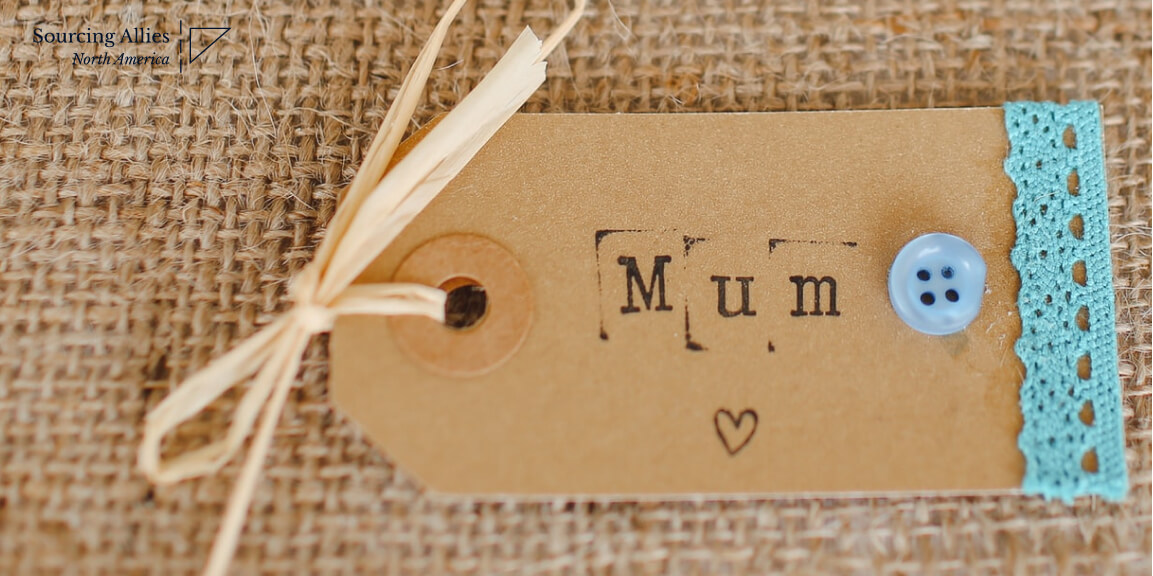
2. Spell out your labelling requirements: White label goods are all about the label, and retailers must be attentive about this aspect of the procurement process. Giving the manufacturer a vague idea about the labelling you require and expecting them to figure out the rest can certainly lead to trouble. Chinese manufacturers are not known to ask their clients for details they don’t provide on their own. If given too little information it’s highly probable the manufacturer will improvise and the end result could be disastrous for the retailer. To avoid unfortunate labelling errors, make sure to specify each aspect of your label, including:
Labelling doesn’t just cover the label but also the packaging for the product. Most manufacturers in China offer standard packaging designs that can be branded with the retailer’s logo. But what if your manufacturer does not offer packaging services, or cannot fulfil your demand for customized packaging? If this is the case, you can ask if the manufacturer has a packaging subcontractor they can outsource the job to, or you can hire one yourself or through your sourcing agent.
3. Play safe: You can’t always choose the products you sell, especially if you’re already running an established business. But if you are just starting out, you should have the power to pick your products. To this second category of retailers, a sound piece of advice is to avoid high-risk products. A good example would be toys and other children’s products. The retailer has little oversight of the production process and therefore cannot say for sure if the product is safe. Specific warnings might need to be affixed to the products, which the first-time retailer might not be aware of. Furthermore, the region where the products are ultimately sold might have strict safety standards that if not met, will leave the retailer vulnerable to legal difficulties. Dietary supplements are another risky prospect for white labelling. The wrong ingredients can cause side effects. The labelling requirements are strict. And the products come with expiration dates, which makes it tricky to control the amount of inventory you hold. When a retailer sells a product with their logo on it, they must be able to vouch for the goods. Buying liability insurance, which covers the cost of compensation that might need to be paid, is certainly a good idea but sometimes, it just makes sense to stick to safe products.
White label sourcing from China works best when someone is managing the supplier relationship on the ground — checking quality at the factory, catching labelling errors before goods ship, and making sure the production batch matches the sample you approved.
Sourcing Allies manages white label and OEM sourcing programmes for brands in the UK, US, and EU — from supplier selection and factory audit through to quality control and delivery. Over 1 million products shipped since 2006. Book a sourcing discussion
A white label product is a generic item produced by a manufacturer and sold to multiple retailers, each of whom applies their own branding and packaging. The underlying product is the same — only the label changes. This is different from private label, where a product is made exclusively for one retailer and can be more deeply customised.
White label products are generic and sold to many buyers — you brand an existing product. Private label means the manufacturer produces a version exclusively for you, with more scope for customisation of materials, features, or design. Private label gives more differentiation; white label is faster and lower-cost to launch. Both are available from Chinese manufacturers.
Start by identifying your product category and shortlisting factories with a track record in it. Verify the factory before committing — check certifications, request references, and order samples before placing a bulk order. If you do not have existing supplier relationships in China, a sourcing partner with physical presence in the country can shortlist, audit, and manage suppliers on your behalf.
At minimum: request a pre-production sample and approve it in writing before production begins; conduct an in-process inspection during production to catch issues before they become full batches; and run a pre-shipment inspection before goods leave the factory. Do not rely on the supplier's own quality checks. For branded products, also verify labelling, packaging, and any compliance markings before shipment.
The most common: the production batch does not match the approved sample; labelling or packaging errors are discovered after goods arrive; the supplier changes materials without notice; communication breaks down and problems are hidden until it is too late. Most of these risks are manageable with in-process quality inspections and a clear written specification — or by working with a sourcing partner who manages the supplier relationship on the ground.
MOQs vary by product category and factory. Generic white label products with no customisation often have lower MOQs — sometimes a few hundred units. Custom packaging, colour changes, or logo additions can increase the minimum. Discuss MOQ requirements with multiple suppliers before committing, and factor in the cost of unsold inventory when deciding on order size.
When your product is selling consistently and you want a version that competitors cannot copy — different materials, different features, or a design unique to your brand. OEM manufacturing gives you full control over the product specification and protects your differentiation. Many brands start with white label to test the market and move to OEM once they have proven demand. A manufacturing partner can advise on when the switch makes commercial sense and manage the OEM process end to end.
Yes. Sourcing Allies manages white label and OEM sourcing programmes for brands in the UK, US, and EU — from supplier identification and factory audit through to quality control and delivery. The team is based in Ningbo with physical presence at the factories. Book a sourcing discussion to discuss your product.
We sometimes share case studies, learnings and webinars of our experiences when sourcing and manufacturing in China and Asia.


Whether you have a full set of CAD drawings or are already in production, we can help.


