
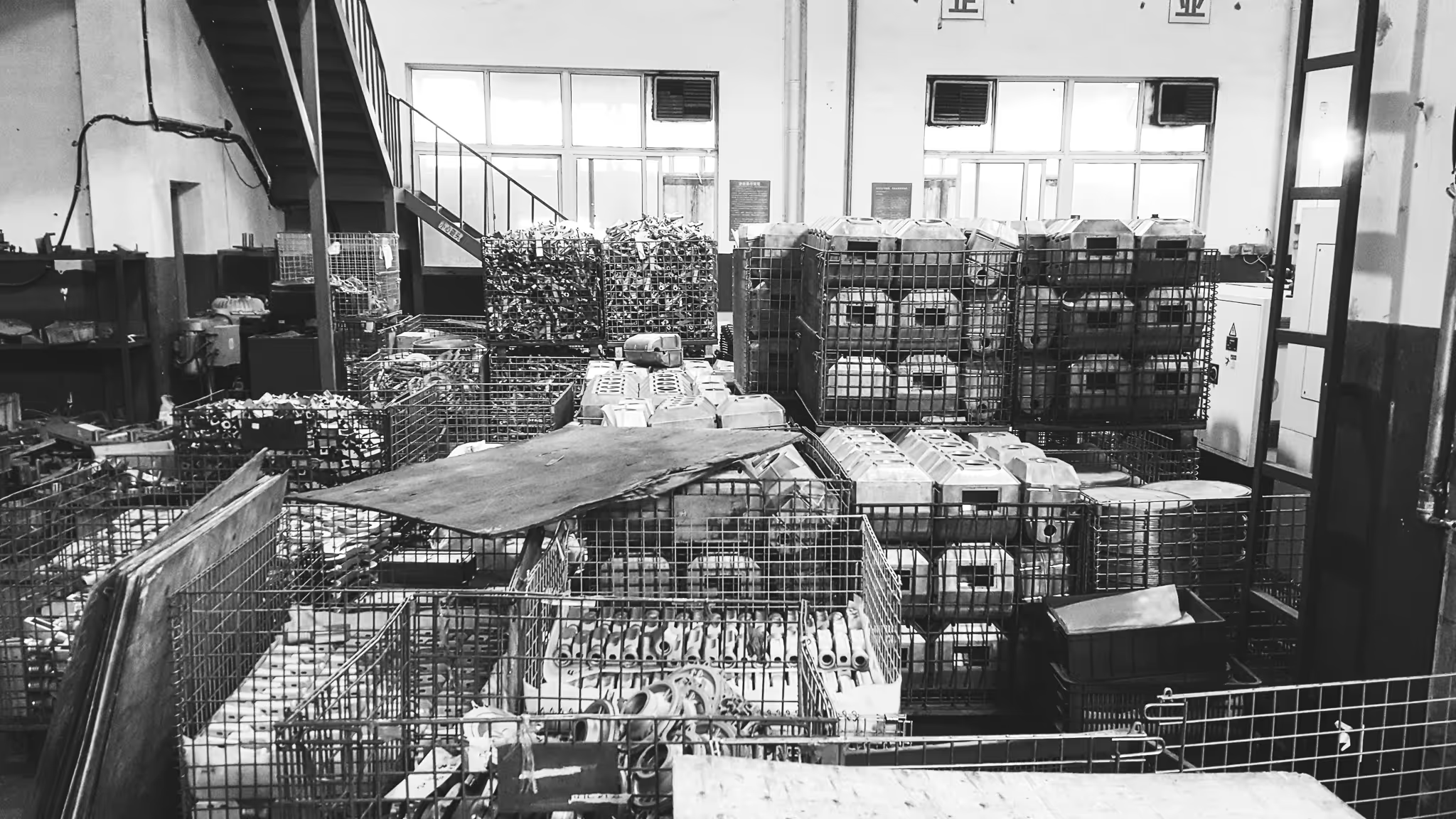
Die casting in China: get the drawing right before the die is cut
You're a hardware founder or product engineer with a drawing for an aluminum or zinc part, about to send it to a factory for a quote. Before you do, we check it against how the die will be built and run. That way you pay for tooling once, not twice. Then we source, cast, inspect and ship the part from China and Vietnam. Changing a line on a drawing costs far less than changing a die.
Finished in CAD isn't finished for die casting
Your spec sheet describes the part you want to hold. The factory reads it differently: how will metal fill this steel cavity, cool and come out, thousands of times over? Nobody has made a mistake. The two sides just mean different things by "finished", and the difference shows up in four places. Settle these after the die is cut and you pay for a tool modification: extra cost, lost weeks and a shorter die life. Settle them on the drawing and all it costs is a conversation. In our drawing review we translate your spec into the factory's terms before any steel is machined.
- 01
Draft angles
Vertical walls drag against the die. If the factory adds taper on its own, your dimensions change.
- 02
Wall thickness
Where thick sections meet thin ones, the metal cools unevenly. You get porosity and sink marks where your drawing shows clean metal.
- 03
Parting line
The seam where the die halves meet has to go somewhere. If nobody chooses, it can land on a cosmetic face or a sealing surface.
- 04
Tool life
Sharp internal corners wear the die faster, and a die that wears out sooner puts up the cost of every part.
The casting process sets your tooling cost and your detail
Compare die-casting quotes on the same fill process. The process sets the price of your steel die, which you pay for once, and the detail and volume it suits.
Gravity: don't overpay for tooling
Thick, plain part at modest volumes? Poured metal fills a lower-cost die under its own weight.
Low-pressure: sound metal under load
Your part carries load? Specify a fill from below: even, with little turbulence. It suits aluminum wheels and structural parts.
High-pressure: thin walls at volume
Metal is injected fast under high pressure. Use it for fine detail and long runs: housings, brackets and handles.
Aluminum sheds heat. Zinc holds detail. Pick by the job.
Die casting isn't always the right fit. If your part suits forging, stamping, injection moulding or aluminium extrusion better, we quote and manage that instead, so you don't need a second supplier.
- 01
Aluminum die casting
For parts that must be light and strong or move heat, such as housings, heat sinks, brackets and machine parts.
- 02
Zinc die casting
For small parts with thin walls, crisp detail or a plated finish, such as door handles, bathroom fittings and hardware. Zinc dies usually last longer, too.
- 03
Magnesium, copper, brass, pewter
Worth the extra cost only when weight, conductivity or finish matters most. We'll tell you if it doesn't.
- 04
Stainless steel
Stainless is too hot for most pressure dies, so it's usually investment cast or forged. We'll match the process to your part.
Drawing to delivery, with a decision at every step
You can stop after any step. Your contract is with our legal entity in Sweden, the US or China, so there is someone to hold to account. For more than one cast part, see sourcing, OEM/ODM and contract manufacturing.
Drawing review
we sign the NDA, then mark draft, wall thickness, parting line and tolerances with the factory before anything is quoted.
Quote
you get quotes on the same alloy, process and finish, with tooling listed separately from the unit price. Go or stop.
Factory check
we confirm it's the real foundry and not a trading company. Our bilingual delivery managers from Ningbo audit machines, staff, process control, safety and management in person.
Samples
first shots from the die are measured against your critical dimensions. You approve them, or we correct the die before mass production.
Production and shipping
we inspect during production and at the end, then handle packing, freight and customs to your door.
One contact, however many parts
A failed part is cheaper to find in the test than on your line. For a cooling-system client, we pressure- and performance-tested each housing, with certification support.
148 components from 72 suppliers in 6 countries, and an assembly line built from scratch. Delivered on time, with one point of contact.
Cooling systems: thermal, electronic and housing components sourced, with pressure and performance testing and certification support.
Over 1 million products shipped from Asia since 2006.
What to know before you pay for a die
The die is the biggest single cost of a cast part. Jeff Crawshaw, our Director of Operations, answers the questions to settle before you pay for one.
What is die casting?
Die casting is a process that forces molten metal, usually aluminum or zinc, into a hardened steel mould called a die. The die is built for one part. Each cycle produces an identical part with tight dimensions and little machining afterwards. Tooling costs a lot upfront and pays off at volume, so die casting suits production runs better than prototypes.
How much does die casting tooling cost?
Die casting tooling cost depends on the part's size, geometry, number of cavities and slides, and the alloy. We quote the die for your part once we have reviewed the drawing, because the price follows your requirements. The cheapest way to control tooling cost is to fix draft, wall thickness and parting line on the drawing, because modifying a finished die costs more.
How long does a die casting die last?
How long a die casting die lasts depends on the alloy and the part. Zinc runs cooler than aluminum and wears the die more slowly. Sharp corners, thin cores and later modifications all shorten tool life. We plan tool life into the quote, so you know when a replacement die will be due.
What is the minimum order quantity for die casting in China?
Die casting manufacturers in China set a minimum order quantity (MOQ) because a die only pays for itself over volume. MOQ varies by alloy, part size and factory, so we confirm it for your part at the quote stage. If your volumes are small, we'll tell you whether gravity casting, investment casting or machining is the better route.
Should I choose aluminum or zinc die casting?
Choose aluminum die casting for light, strong parts that move heat, such as housings, heat sinks and brackets. Choose zinc die casting for smaller parts with thin walls, fine detail or a plated finish, such as handles and fittings. Zinc dies usually last longer. We check the choice against your load, finish and weight requirements during drawing review.
Can stainless steel be die cast in China?
Stainless steel is rarely pressure die cast, because its melting point is too high for standard dies. In China, stainless steel parts are usually made by investment casting or forging instead. If your drawing calls for stainless, we find a foundry that runs the right process, or suggest an alloy that can be die cast if it suits the part better.
Who owns the die if I change factory?
If you paid for the die, you should own it, and that needs to be in writing before tooling starts. We write tooling ownership into the contract, which you sign with our legal entity in Sweden, the US or China. That way the die can move with you if production ever has to.
How do I find reliable die casting manufacturers in China?
To find a reliable die casting manufacturer in China, first confirm the supplier is a real foundry and not a trading company. Then audit its machines, staff, process control and management on site. Our bilingual delivery managers from Ningbo do this in person, and we compare quotes on the same alloy, process and finish. Our network also covers Vietnam and India.
Send us the drawing before you send it to a factory
Share your drawing under NDA. We'll go through draft, wall thickness, parting line and tool life with you, then quote the part cast, inspected and delivered.


A drawing, a sketch or a paragraph is enough to start.